
Safeguarding
We take the safeguarding of our young people, players, volunteers and coaches seriously
The Safeguarding of all people in cricket is the main priority for the Gloucestershire Cricket Foundation.
Gloucestershire Cricket Foundation is committed to ensuring all people participating in cricket, have a safe and positive experience.
Each club across the county should have its own Club Safeguarding Officer who is nominated by the club and has attended the necessary courses provided by the GCF e.g. Safeguarding and Protecting Children (SPC) and ECB Club Safeguarding Officer.
Best practice recommends that each club should also have a deputy to take the place of the Safeguarding Officer should they be unavailable. These officers’ details should be provided to the league in which the club plays, and also the GCF.
Training for Club Safeguarding Officers
Latest Safeguarding Updates
Who We Are

County Safeguarding Officer
Nicky Clarke
📞 07852 815430

Deputy Safeguarding Officer
John Peplow

GCF Safeguarding Trustee
Claire Lyes

Regional EDI & Discrimination Executive
Jane Law
📞 07733 671643

Discipline Contact
Steve Silk
County Safeguarding Officer’s role
- Point of contact for clubs, leagues, parents, children, and volunteers/staff within the county.
- As a source of procedural advice for the county’s clubs and leagues and their members.
- The main point of contact within the county for Club Safeguarding Officers and the Cricket Regulator Safeguarding Team.
- The main point of contact within the county for relevant external agencies, in connection with safeguarding. Ensuring correct and comprehensive reporting procedures exist for raising and managing safeguarding concerns.
Organisations providing services to children should ensure that a culture of openness and trust is fostered within the organisation in which staff can share any concerns about the conduct of colleagues and be assured that these will be received in a sensitive manner.
Creating a safe and inclusive environment
We recognise all children participating in cricket (regardless of age, gender, race, religion, sexual orientation, ability, or disability) have the right to have fun and be protected from harm, in a safe environment.
We ensure individuals working within cricket at, or for, our club provide a welcoming, safe, and fun experience for children.
We provide an environment where the views of children, parents and volunteers are sought and are welcome on a range of issues. This will help us create an environment where people can voice any concerns (about suspected child abuse/neglect and/or about poor practice) to the Club Safeguarding Officer.
We adopt and implement the England and Wales Cricket Board (ECB) “Safe Hands – Cricket’s Policy for Safeguarding Children.”
We ensure all individuals working within cricket at, or for, the club are recruited and appointed in accordance with ECB guidelines and relevant legislation.
We ensure all individuals working within cricket at, or for, a club are provided with support, through education and training, so they are aware of, and can adhere to, good practice and Code of Conduct guidelines as defined by the ECB and the club.
We ensure all people who work in cricket at, or for, our club (such as staff, officials, volunteers, team managers, coaches and so on) understand how the “Safe Hands Policy” applies to them.
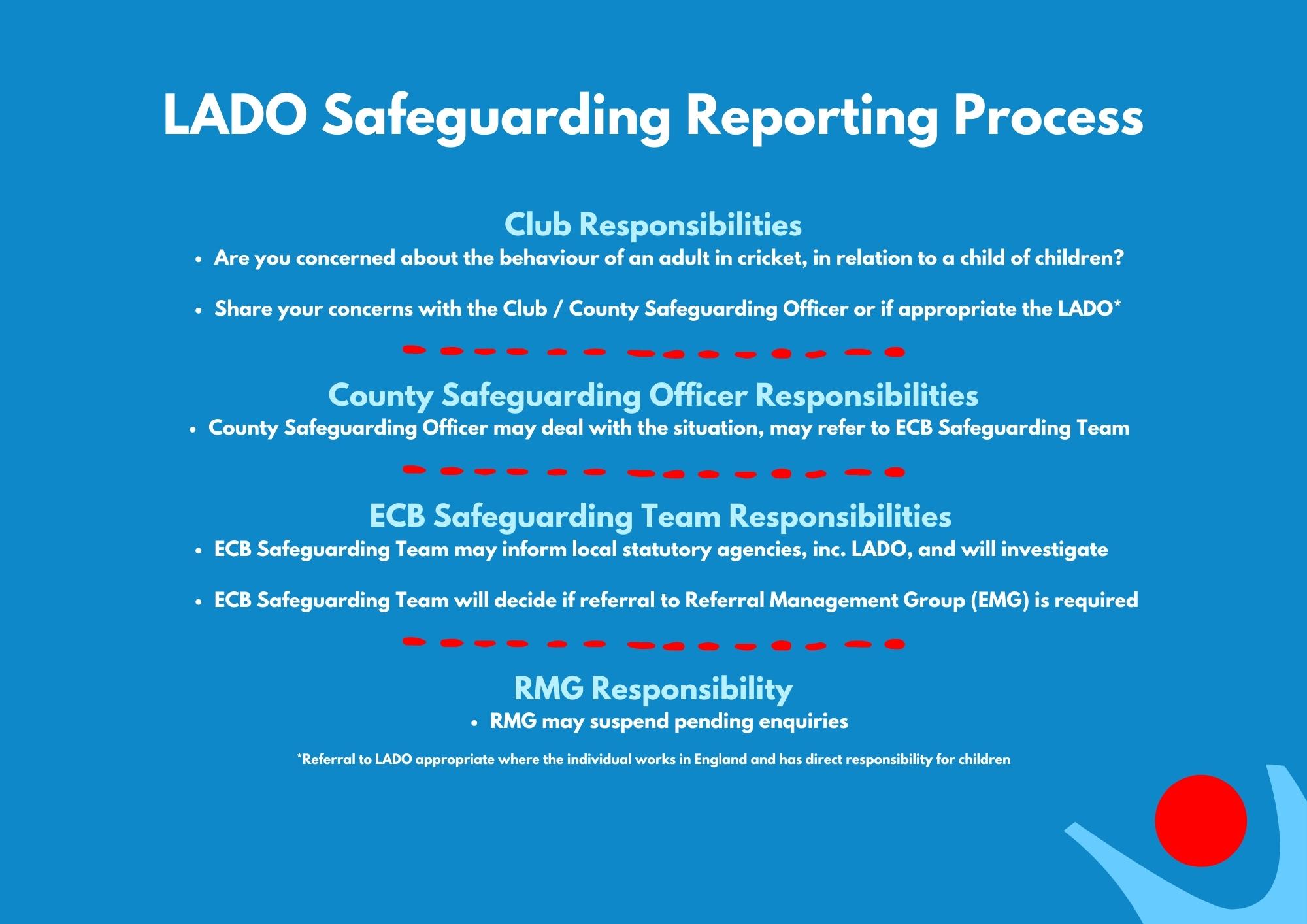
What to do if you have a concern
We ensure all suspicions, concerns and allegations are taken seriously and dealt with swiftly and appropriately.
We ensure access to confidential information relating to child safeguarding matters is restricted to those who need to know, to safeguard children. This would include the Club Safeguarding Officer and appropriate external authorities, such as the Local Authority Designated Officer (LADO), as specified within ECB child safeguarding procedures.
Low-Level Concerns
A low-level concern is a concern about behaviour that doesn’t meet the threshold of harm but is still inconsistent with a club’s code of conduct or values. Low-level concerns can be about behaviour that’s inappropriate on the field or off the field. They can also be about behaviour that causes a sense of unease or a “nagging doubt”.
Low-level concerns are different from allegations, which are concerns that meet the harm threshold. However, multiple low-level concerns can add up to form a pattern that meets the harm threshold.
Low-level does not mean that it is insignificant; it means that the behaviour does not meet the harm threshold for a referral to the
Cricket Regulator Case Management Team. If ever in doubt, speak with your Club Safeguarding Officer or Nicky Clarke.
We need to commit to fostering a culture of transparency and openness in reporting, and this includes self-reporting that protects an individual from misunderstandings and/or allegations (e.g. occasions whereby a coach finds themselves in a situation that is unavoidable and unintentional but happened to breach best practice guidance).
Remember that sharing concerns allows trends and patterns of inappropriate/problematic and concerning behaviours to be identified sooner.
Safeguarding Policies
The links below should provide any information you require.

ECB Safeguarding Kit Bag
Find all the policies, guidance, templates and ECB regulations a club needs to help create a safe, welcoming and inclusive environment.